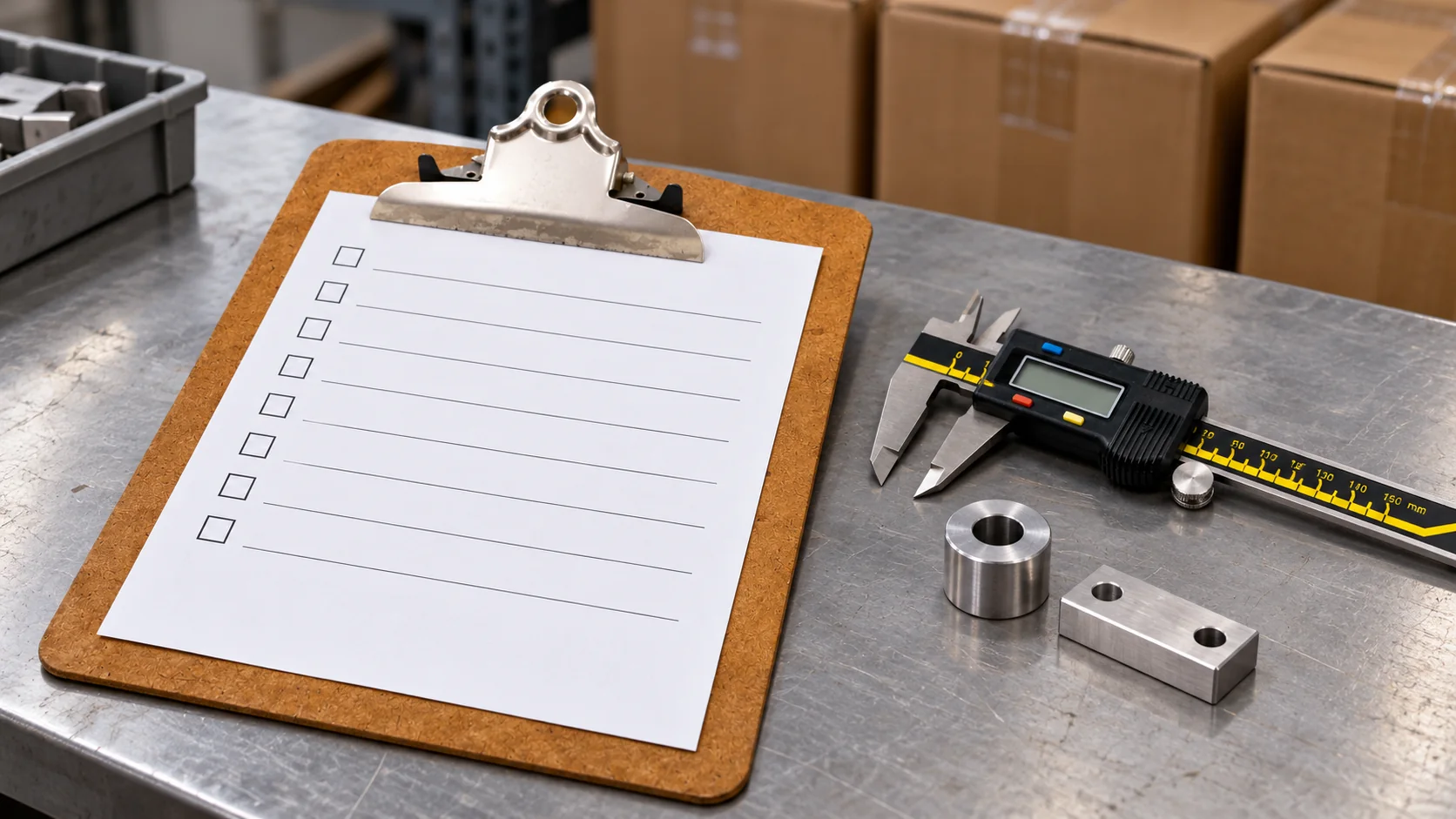
Book an inspection too early and the goods may not be ready. Book it too late and faults may delay the shipment. This guide helps you choose the right stage, brief the inspector and plan time for repairs. It also explains what a report can and cannot tell you.
Choose what to check and when
A check before production can confirm whether the planned materials, parts, and tools are ready. It is useful when the build is new or an early mistake would affect the whole order. It does not tell you the quality of goods that have not yet been made.
A check during production looks at work while there is still time to change it. It can catch a wrong finish or repeated fit problem before the full run is complete. Agree on which stage and quantity must be ready for that visit.
A check before shipment looks at finished goods and packing. Agree how much must be complete and packed before the inspector travels. A loading check then looks at what is placed in the vehicle or container. It does not replace checks of the product itself.
Agree on the check list before the visit
Give the inspector the current product drawing, order, and approved sample details. Explain what matters most to the buyer. For example, an outer size may control whether a part fits, while a small color mark may be less important.
Define faults before the inspector finds them. State which defects are not allowed and what limits apply to others. Agree on a sampling plan: how units will be selected and how many will be checked. The plan should fit the product, lot size, and risk. There is no single sample size that suits every order.
State which checks can be done at the factory. Some tests need special tools, skills, or a lab. A general inspection report is not a safety certificate. If the product needs formal test evidence, arrange that separately with a suitable provider.
NIST’s acceptance-sampling guidance explains that sampling supports a decision about accepting a lot; its main purpose is not to estimate the lot’s quality. Our scheduling and briefing steps are practical recommendations. Ask the inspection provider to define the selection method, sample size and acceptance criteria for your order.
Link the inspection brief to the approved sample and product specification.
Example: a shipment date leaves no room for repairs
This is an invented schedule example. A buyer wants to collect goods on Friday. The seller proposes an inspection late on Thursday. The buyer asks what happens if the report finds a fault that takes two days to fix.
The plan has no answer. The buyer and seller move the check earlier and confirm when finished goods will be ready. They leave time for the report, any repair, and a follow-up check. If that timing is not possible, they review the shipment plan instead of pretending the risk has gone away.
The lesson is not to use a fixed number of buffer days for every order. Ask how long likely repairs would take. Then build a realistic gap between the check and final release.
Look beyond the pass or fail label
Start with the exact item and lot inspected. Match the order number, product version, total quantity, and packing status. A report on a similar product or an earlier lot may not answer the question for this shipment.
Next, check how samples were chosen. Ask whether the inspector could select units across the lot. Review the number tested, actual measurements, and photos of faults. If a required test was not done, treat it as an open item rather than a pass.
- Confirm that the report covers your order and current specs.
- Check the sample count and selection method.
- Read each measured result against the agreed limit.
- Note tests that were skipped or could not be completed.
- Review packing, labels, quantities, and visible damage.
- Record open points and who must answer them.
A short summary is helpful, but it should not replace the detail. A pass label does not remove the limits of sampling. A failure should lead to a clear record of the fault, not just an argument over the label.
Agree what happens if faults are found
The buyer may ask for sorting, repair, or a new check. In some cases, the buyer may accept a stated difference in writing. Technical or safety issues need review by the right person. A lower price does not make an unsafe product acceptable.
For a repair, agree on the method, quantity affected, and proof required after the work. Photos of one good unit do not show that the whole lot was fixed. Decide whether the follow-up check needs a new sample or wider scope.
Payment and shipment decisions should follow the agreed contract. Do not assume a report creates new rights that were never part of the deal. Set the release steps before production so both sides know what evidence is required.
Confirm the goods and test setup are ready
Before booking travel, ask the factory to confirm access, working hours and the location of the goods. Name a contact who can arrange samples and answer questions. Confirm that the agreed tools, power supply and test setup will be available. A booked visit has little value if the goods are at another site or the required test cannot run.
Agree how cartons will be opened and repacked after sampling. The inspector should have the access required by the agreed plan. If the seller limits selection to a few prepared boxes, record the limit in the report. The buyer can then decide whether more access or another visit is needed.
Protect other customers’ private information during the visit. Ask only for records relevant to your product and order. A factory may reasonably hide names or prices while still showing the process evidence needed. Plan these boundaries in advance so a privacy concern does not become an avoidable delay on inspection day.
Who checks, who tests and who approves shipment?
An inspection may check size, appearance and packing on selected goods. A lab performs the specific tests you have ordered. The buyer decides whether the shipment can leave under the agreed terms. Keep these jobs separate. One report does not automatically cover all three.
For a new product, ask which checks must happen before the full run begins. A test that consumes several weeks cannot be treated as a last-day shipment task. Put sample dispatch, report dates and possible retests into the schedule. Assign a person to review each result.
When the report arrives, make a short action list. Mark each item as accepted, waiting for an answer or needing a fix. Add a person and a deadline. Keep the full report and its limits with that list. Save the final shipment approval beside the product requirements used for the check.
Prepare a useful inspection request
Send the order, specs, quantity, factory address, and likely ready date. Add the known risks and any past faults. State who can approve a change and who will review the report. This gives the inspector a clear job and helps avoid an empty visit.
JFScope can help collect supplier answers and arrange checks. Appointed third-party providers carry out inspections or lab tests and issue the reports. Your team keeps final technical and buying approval.
Our third-party inspection coordination service explains the support available and the boundaries of each check.